By Jen Weimer, stewardship assistant
Each year Monadnock Conservancy staff and volunteers monitor the easements we hold to ensure compliance, assess forest management, identify forest health concerns, check boundaries, and maintain landowner relationships. It is an important part of what we do to protect over 24,000 acres of conserved land throughout the region. Annual easement monitoring is also an integral component of maintaining our accreditation with the Land Trust Alliance – a national organization that supports and advocates for land trusts.
As the Conservancy’s stewardship assistant, I monitored easements on 140 properties this year, traversing over 300 miles through forests, fields, and farms – the equivalent of walking from the southern border of Massachusetts to the northern tip of New Hampshire. On a typical visit I walked the boundaries, interior trails, and other areas of the property where encroachment might occur, or management activities had taken place. I inspected timber harvests to ensure they reflected the goals of the management plan, tagged boundaries, and noted new hoop houses, fences, and other structures built on farms this year. I utilized GPS-enabled software apps for navigation and collected waypoints of any issues or changes I found. I also documented findings with photographs to include in the final report.
While monitoring visits often focus on documenting violations, noting boundary issues, and identifying invasive species, it is also a wonderful opportunity to meet with landowners to discuss management options and educate them about the land they are protecting. Prior to monitoring we contact landowners to schedule visits. Landowners are not always available or able to walk their property, but we try to meet with as many as we can, even if it's just to catch up for a few minutes before or after the walk. I met with dozens of landowners this year. For some, it was their first venture out as they had been wary about bushwacking on their own. Others were familiar with their land, which may have been in their family for generations. Landowners enjoyed showing me the places they explored while growing up or sharing stories about their family history in the region. I shared my knowledge on tree identification, forest pests, and forest management. Each visit was a learning experience for all involved.
Wildlife sightings were also a popular conversation topic among landowners. During our walks we flushed grouse and woodcock and heard many barred owls ask, “who cooks for you?” In addition to the typical sightings, one landowner shared a game camera image of a mountain lion and told stories of cows that occasionally got loose and roamed the woods for months. On my quieter solo visits, I encountered flocks of turkeys, numerous porcupines, and many deer – including a couple of fawns. In one memorable encounter, a deer charged me while I was conversing with a porcupine that I had nearly stepped on. The porcupine had been waddling beneath a downed tree I was climbing over. As I paused to apologize for nearly squashing it, a deer charged at me from a nearby grove of hemlock saplings before leaping over the downed tree – six feet in the air – snorting and whistling at me all the way. Realizing there must be a fawn bedded down in the hemlock, I apologized again for my intrusion and continued cautiously on my way.
Having worked in the forests of New Hampshire for twenty-five years, wildlife encounters do not easily startle me. I have met a few moose, coyotes, and bears along the way but none of these prepared me for the herds of cows I met this summer while monitoring farms. Unlike wildlife – who typically run the other way – cows are curious and approach when you walk through their “habitat.” Even when I tried to avoid them, they somehow managed to find me. I could leave a field and cut through the forest, only to find them waiting for me at the top of another hill. They all appeared friendly enough and to be enjoying this game of hide and seek, but I preferred to keep some distance between us. It may seem silly to be more wary of a cow than a bear, but for me cows have always been on the other side of a fence.
Growing up in southwestern Pennsylvania, I spent my summers exploring the roughly twenty acres of woods and cornfields behind my home. I climbed trees and boulders, watched wildlife forage, and took naps in the spongy moss (no ticks back then). In high school I photographed my favorite trees and fungi for my photography class. I never thought about who owned the land or that one day the beech tree I carved my initials in might not be there. Decades later, houses have replaced the cornfields, the deer are devouring my mother’s flowers, and landowners have restricted access to what little forest remains. I often wonder how my life would be different if I had not had this magical place to develop my love of nature.
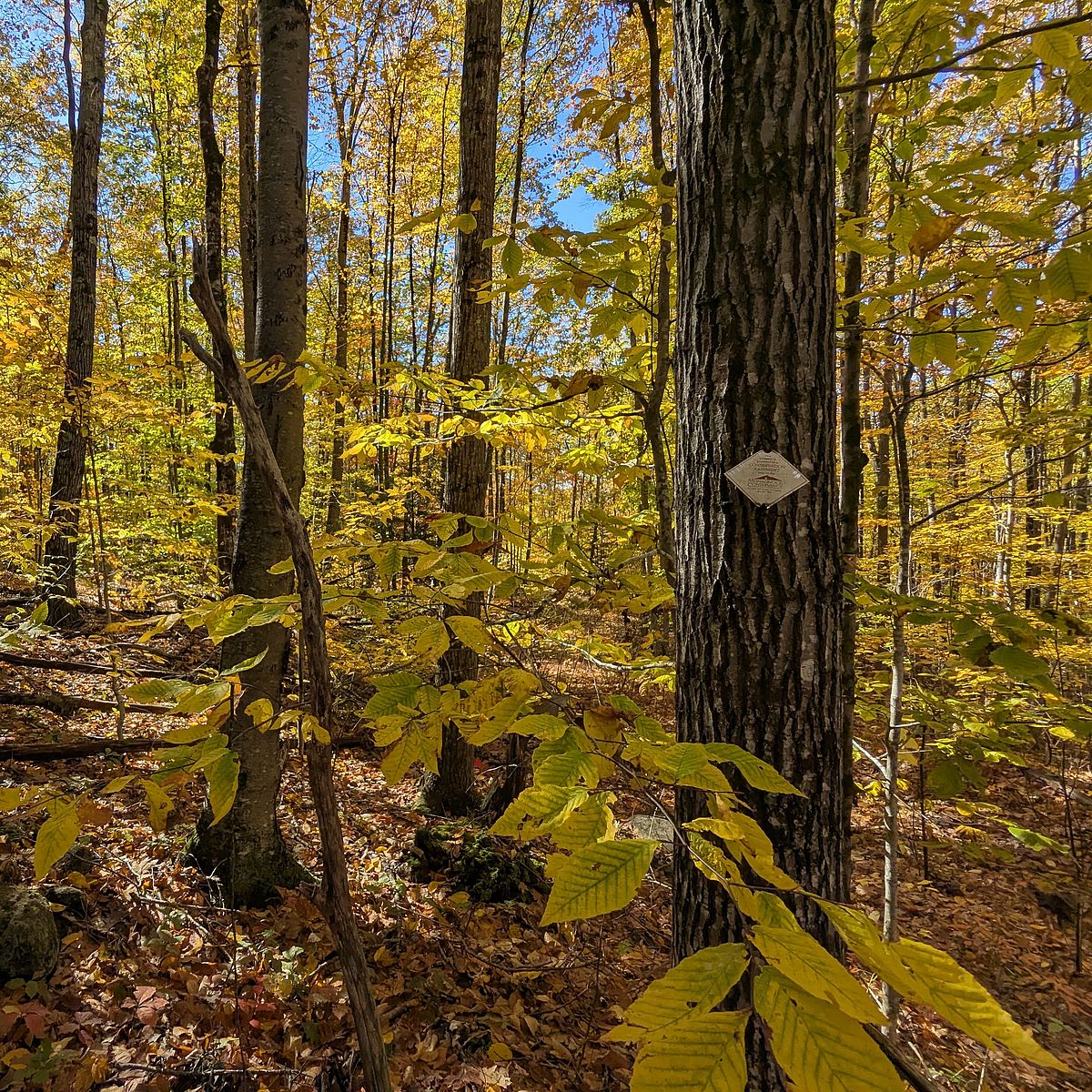
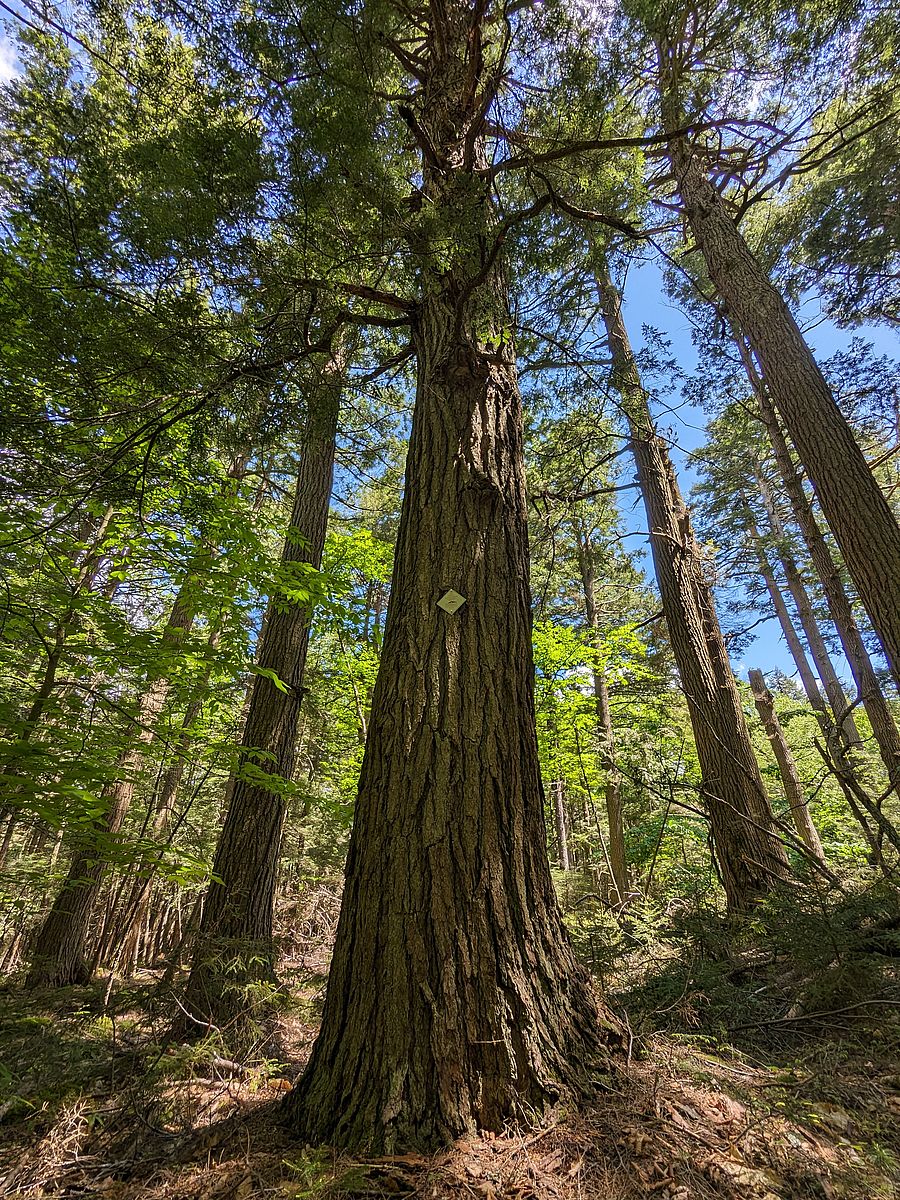
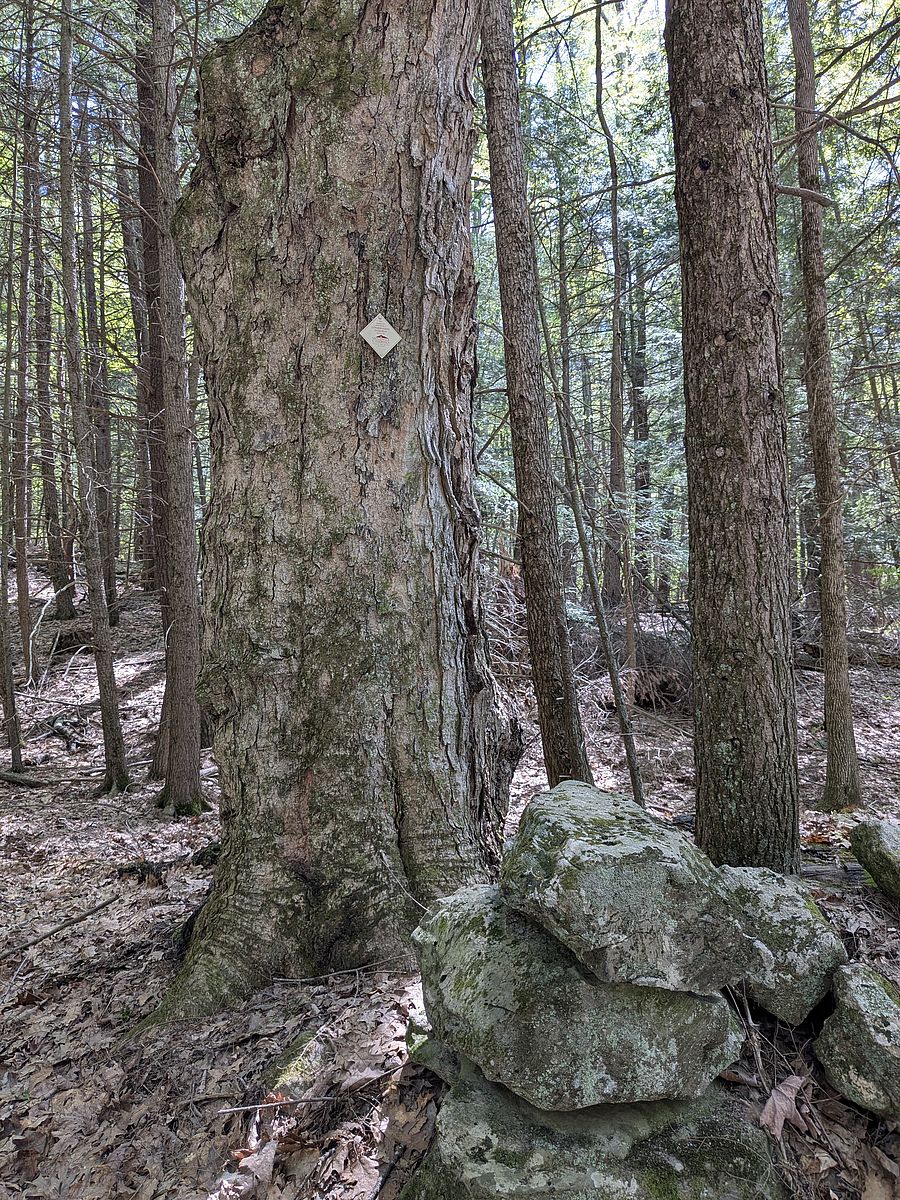
To this day, I still enjoy photographing trees and this year I captured images of spectacular ones while monitoring the Conservancy’s easements. I am most excited by large trees that have stood for hundreds of years and managed to weather many storms, ward off forest pests, and evade the chainsaw. Many of them are boundary trees with trunks extending near or across a property boundary. Landowners typically leave these trees uncut to avoid encroachment. With diameters of thirty inches or more, they dwarf the forest around them, like the way Mount Monadnock dwarfs the other hills in our region.
There are countless Conservancy properties with fields and forests that frame Mount Monadnock. I feel privileged to have walked many of them and thankful to those who have conserved them. At the end of the field day, I am exhausted – covered in sweat, ticks, and forest debris – but I rest easy knowing I have helped to protect someone’s special place.